Sorting and stacking toys can give children hands-on practice with skills such as color matching, counting, sequencing, and balance. Choose by your child’s age and interests, then consider whether you want a simple stacker, a themed playset, or activities that grow into early math practice.
Quick Top Products
Learning Resources Poppy the Count & Stack Flower Pot
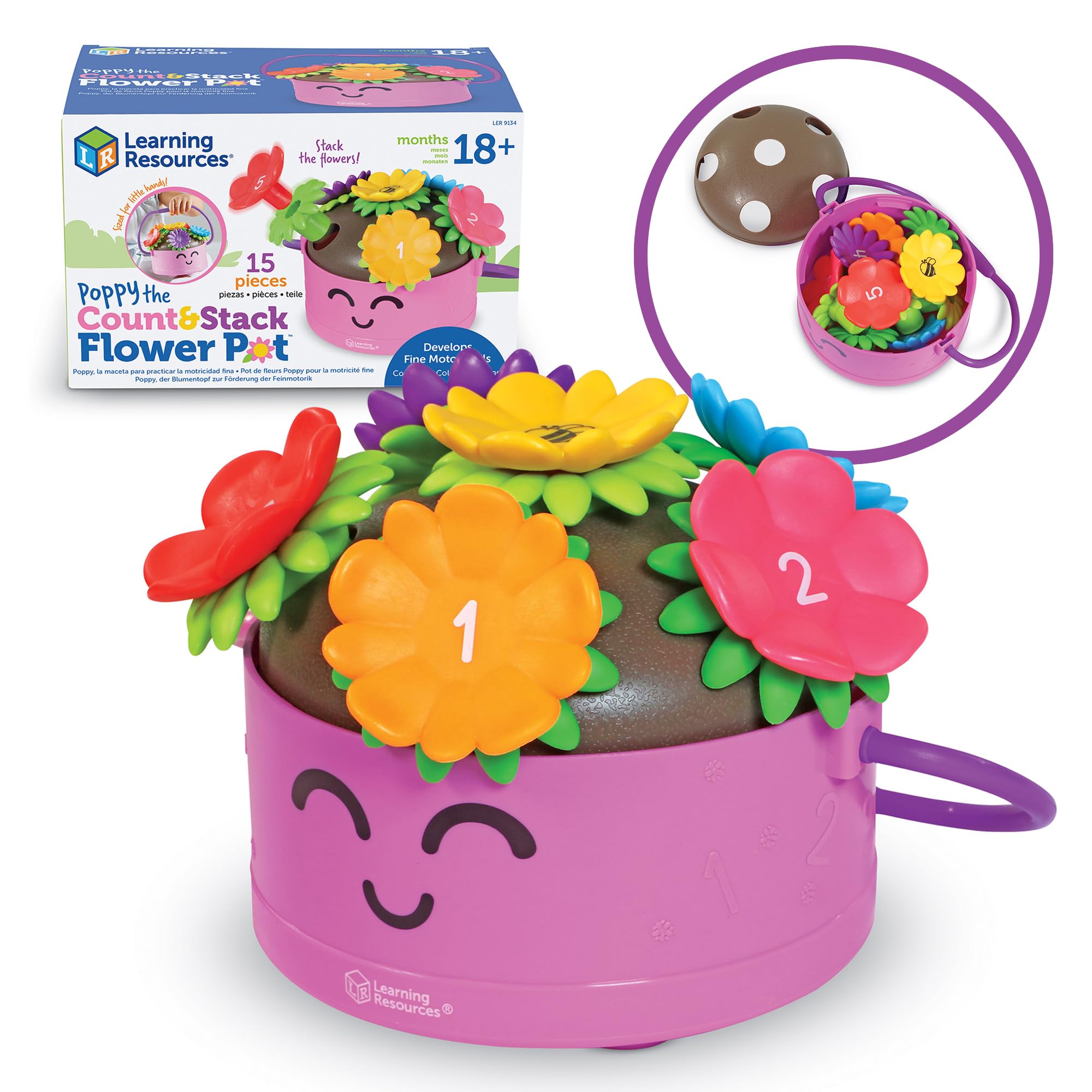
- Stack two-piece flowers and count them as children play.
- The set is designed for children as young as 18 months.
- A kid-sized handle supports carrying the pot during imaginative play.
Best For: Toddlers ready to stack, count, and carry a playful flower pot.

BEST LEARNING Stack & Learn Musical Stacking Rings
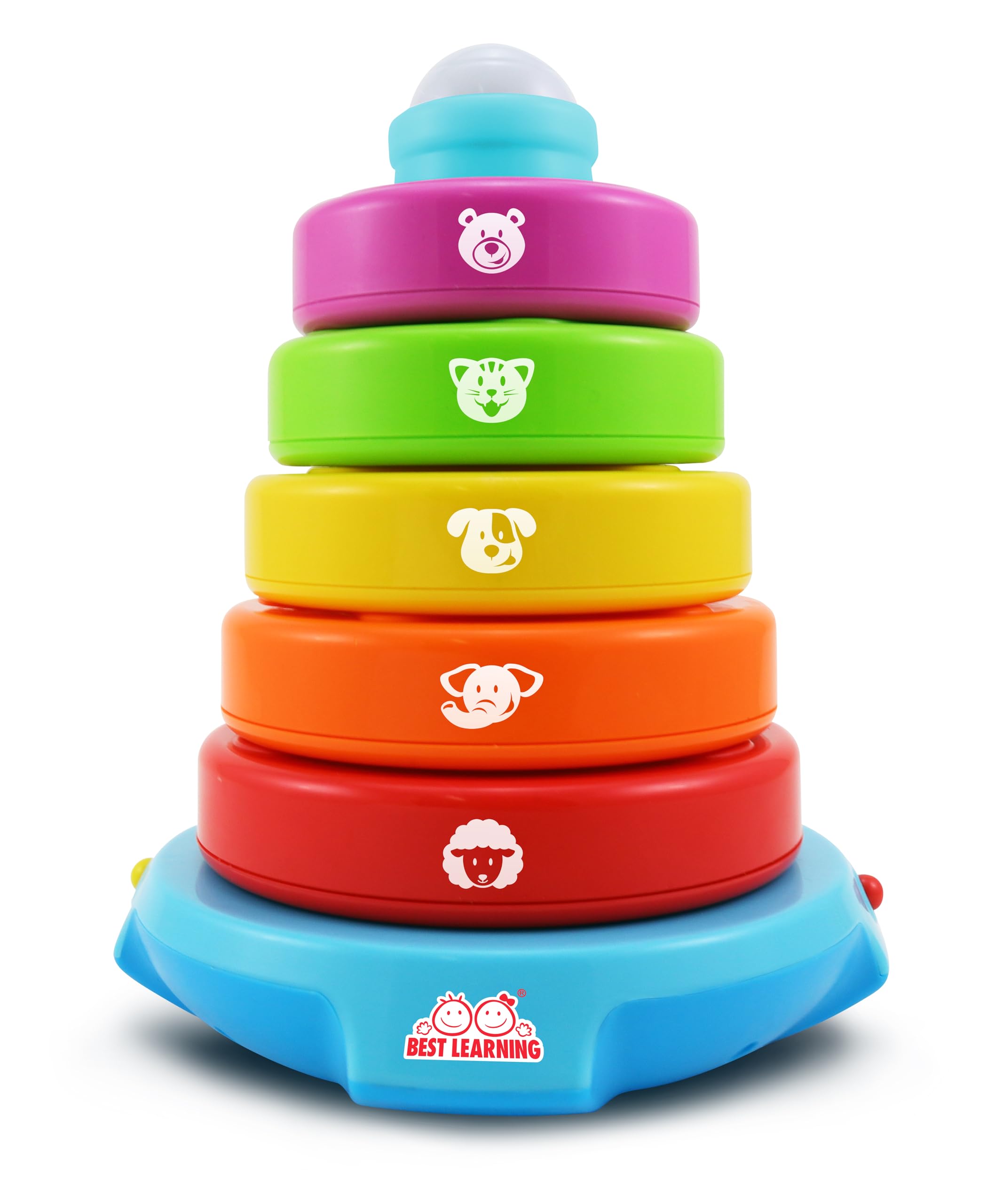
- Five rings connect stacking with colors, instruments, and animal sounds.
- Three modes focus play on colors, animal sounds, and instruments.
- Three AAA batteries are included.
Best For: Babies and toddlers who enjoy sound-based play alongside stacking.
Mr. Pen Stacking Rings Toy
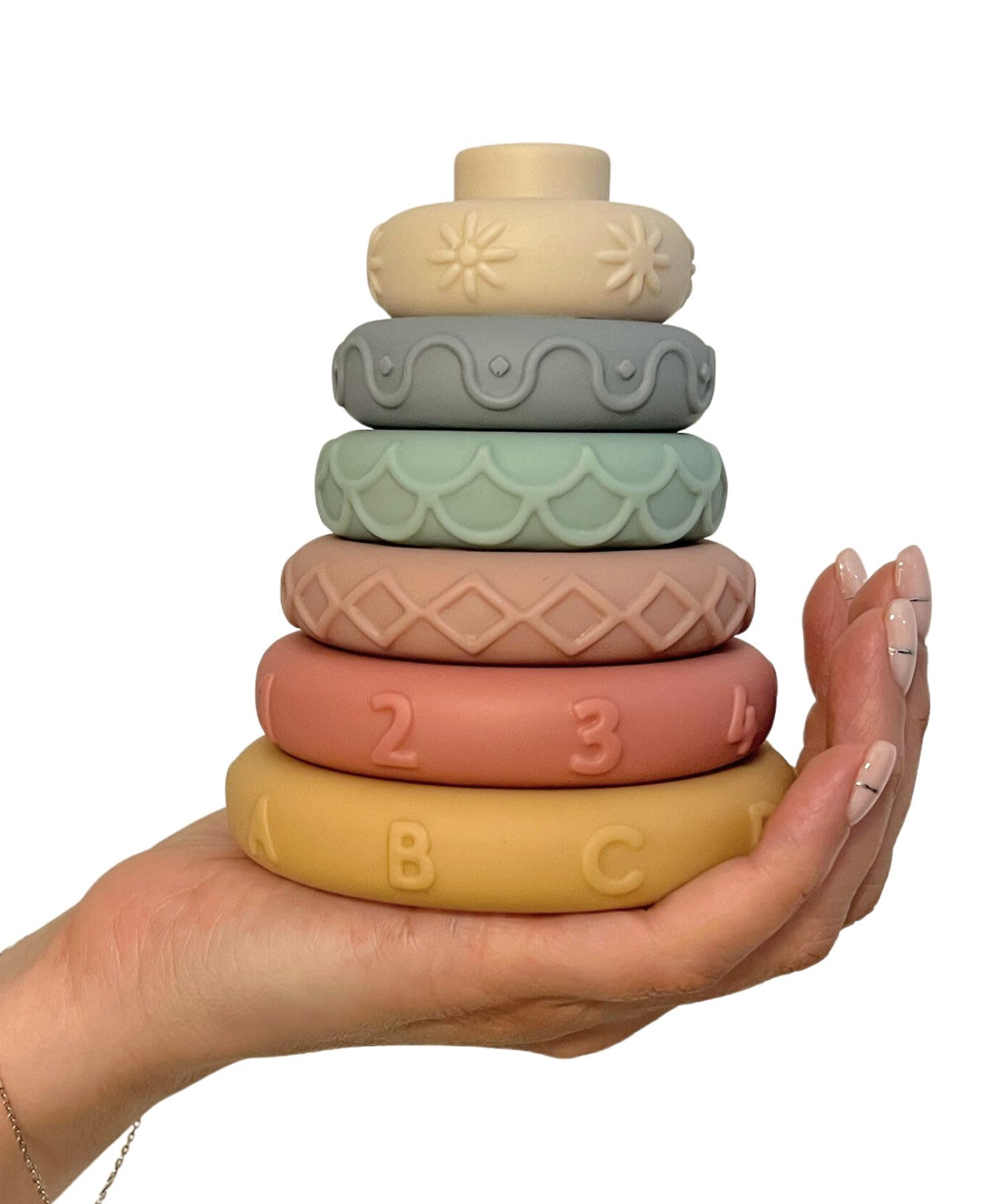
- Six brightly colored rings come in varying sizes.
- Arranging the rings introduces size and sequencing concepts.
- The stackable design supports storage and transport.
Best For: Families wanting a straightforward, portable ring stacker for early sequencing play.
IPOURUP Wooden Farm Animal Stacking Blocks
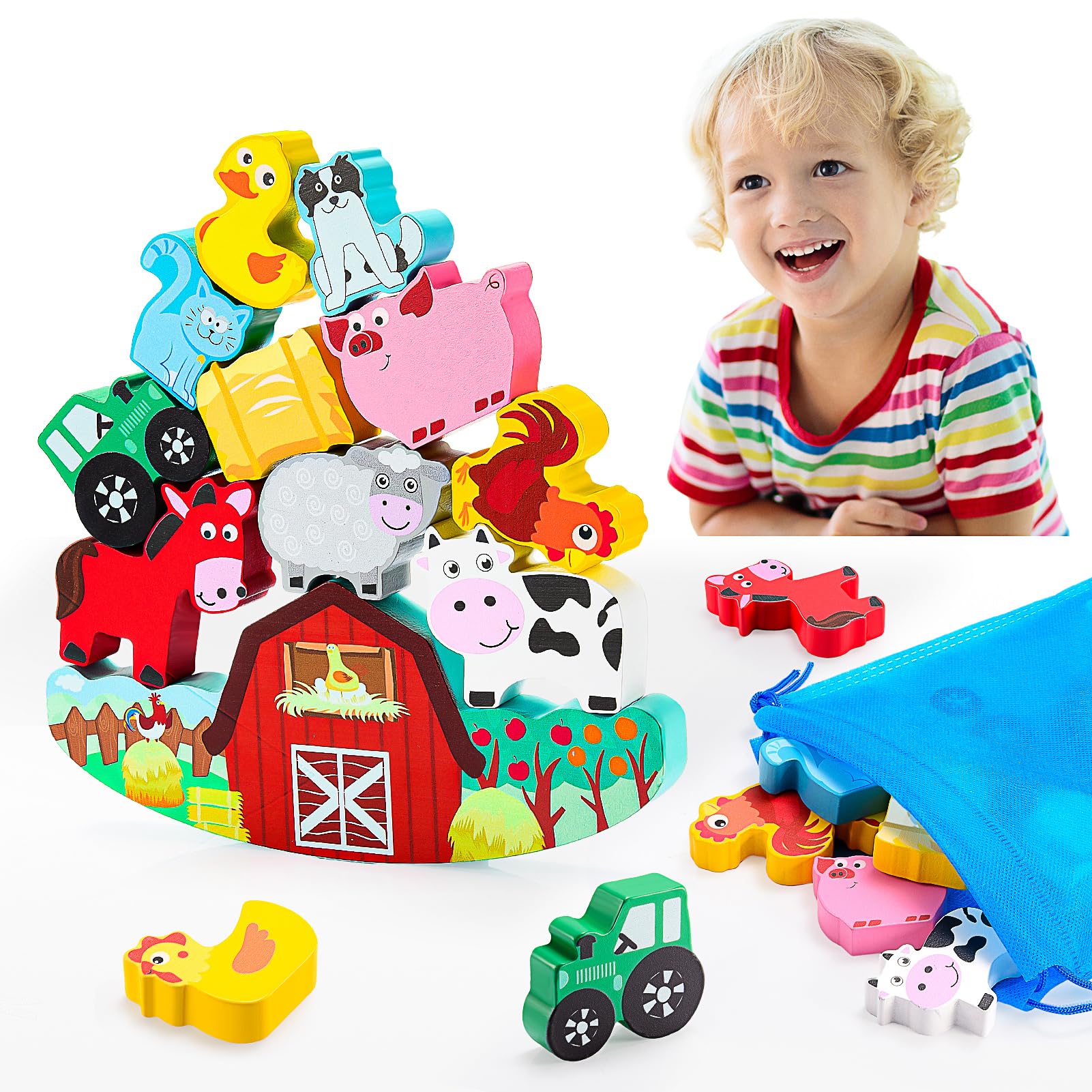
- Includes eleven farm animal blocks and a balance base.
- The chunky block design is intended to be easier for young children to grasp.
- The set is sized for children aged 3–6.
Best For: Preschoolers interested in animals and balancing blocks on a base.
IPOURUP Wooden Dinosaur Balance Game
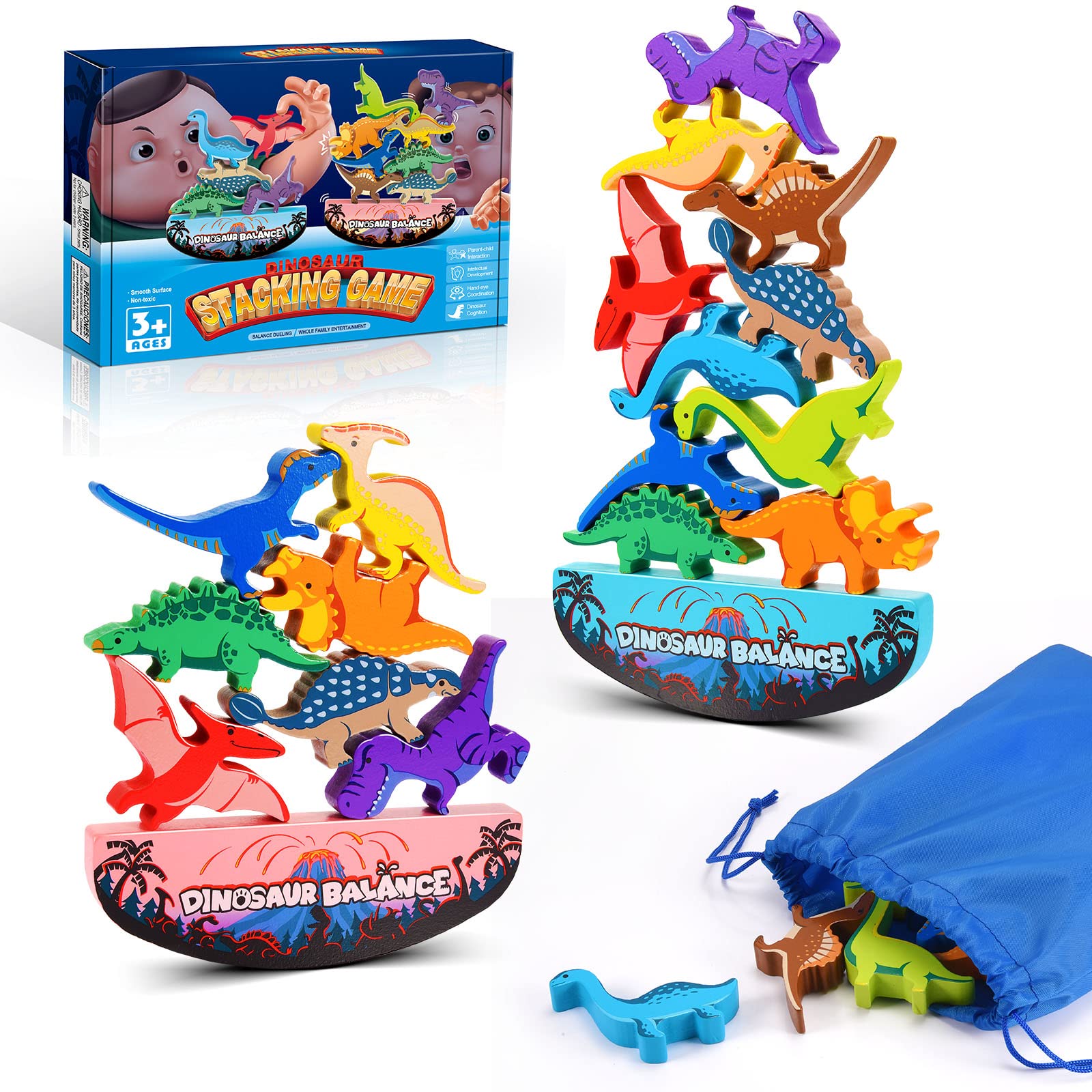
- The double set includes two bases and twenty dinosaur blocks.
- The instruction manual includes nine stacking methods.
- It supports one to four players.
Best For: Families who want a dinosaur-themed stacking challenge for shared play.
Learning Resources Smart Scoops Math Activity Set
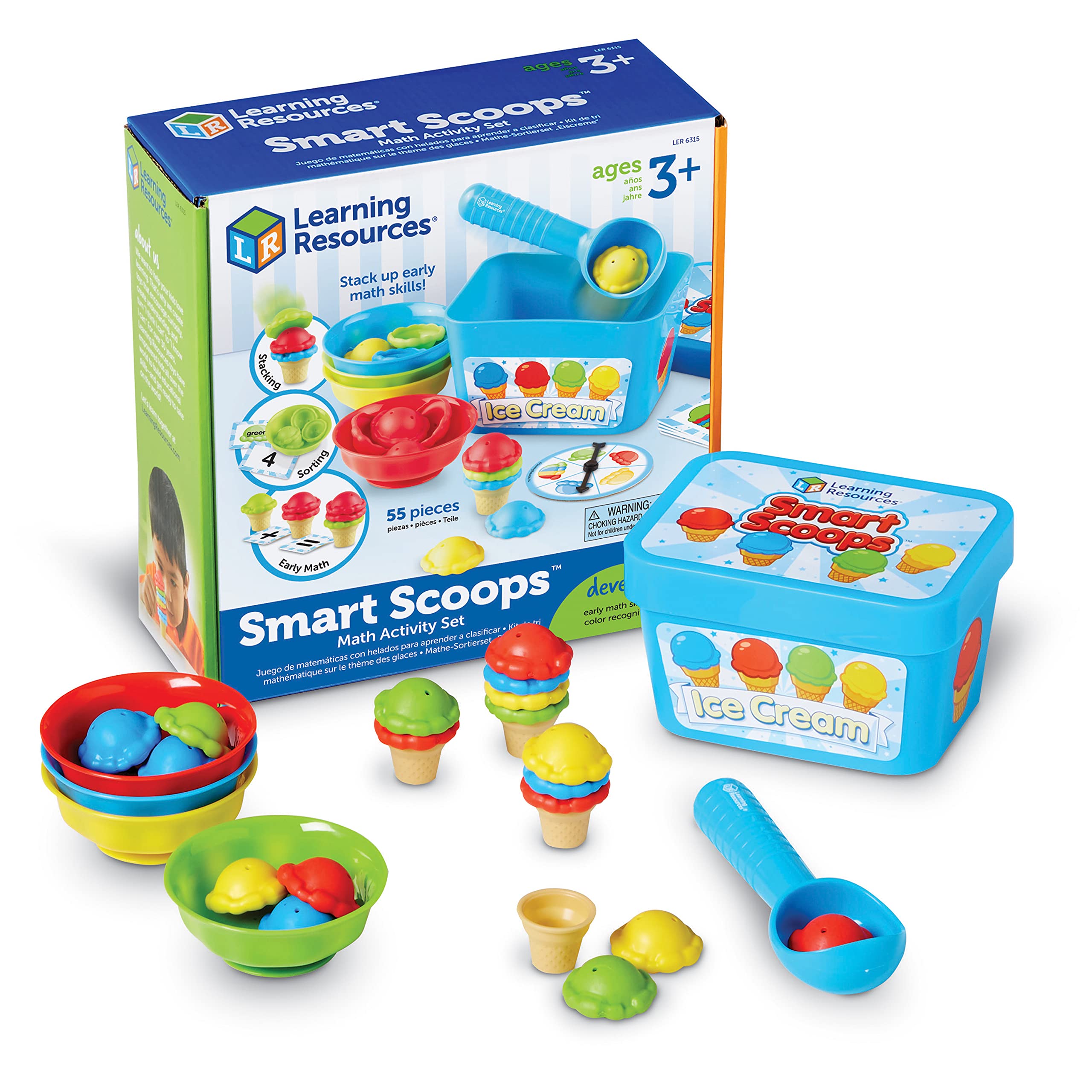
- Stackable scoops support counting, sorting, and sequencing.
- Double-sided cards include lessons and examples.
- A storage container helps keep the scoops together.
Best For: Preschoolers who enjoy pretend ice cream play with early math prompts.
Learning Resources Stack and Count Layer Cake
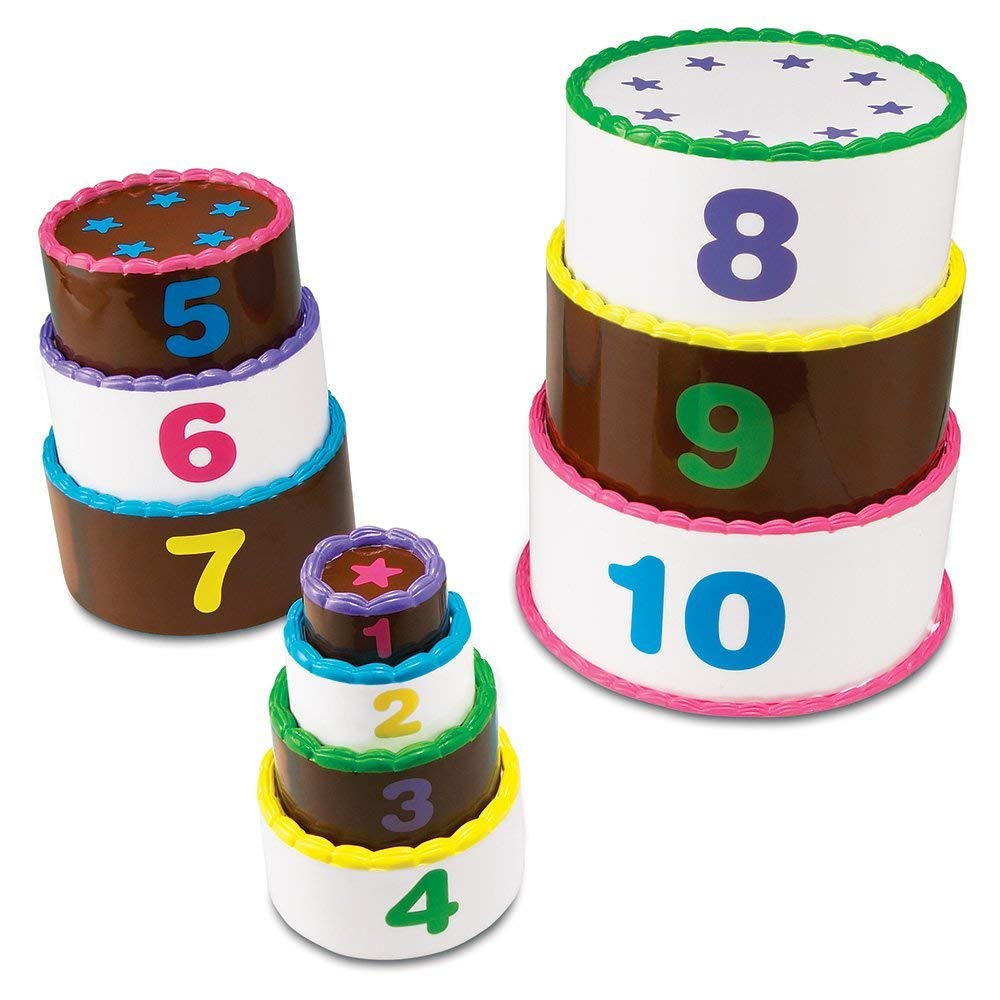
- Ten alternating chocolate and vanilla layers form the stacking activity.
- Decorations correspond to numerals printed on the layers.
- Designed for toddlers 18 months and older.
Best For: Toddlers who like pretend food and are beginning to notice numerals.
Learning Resources Carlos the Pop & Count Cactus
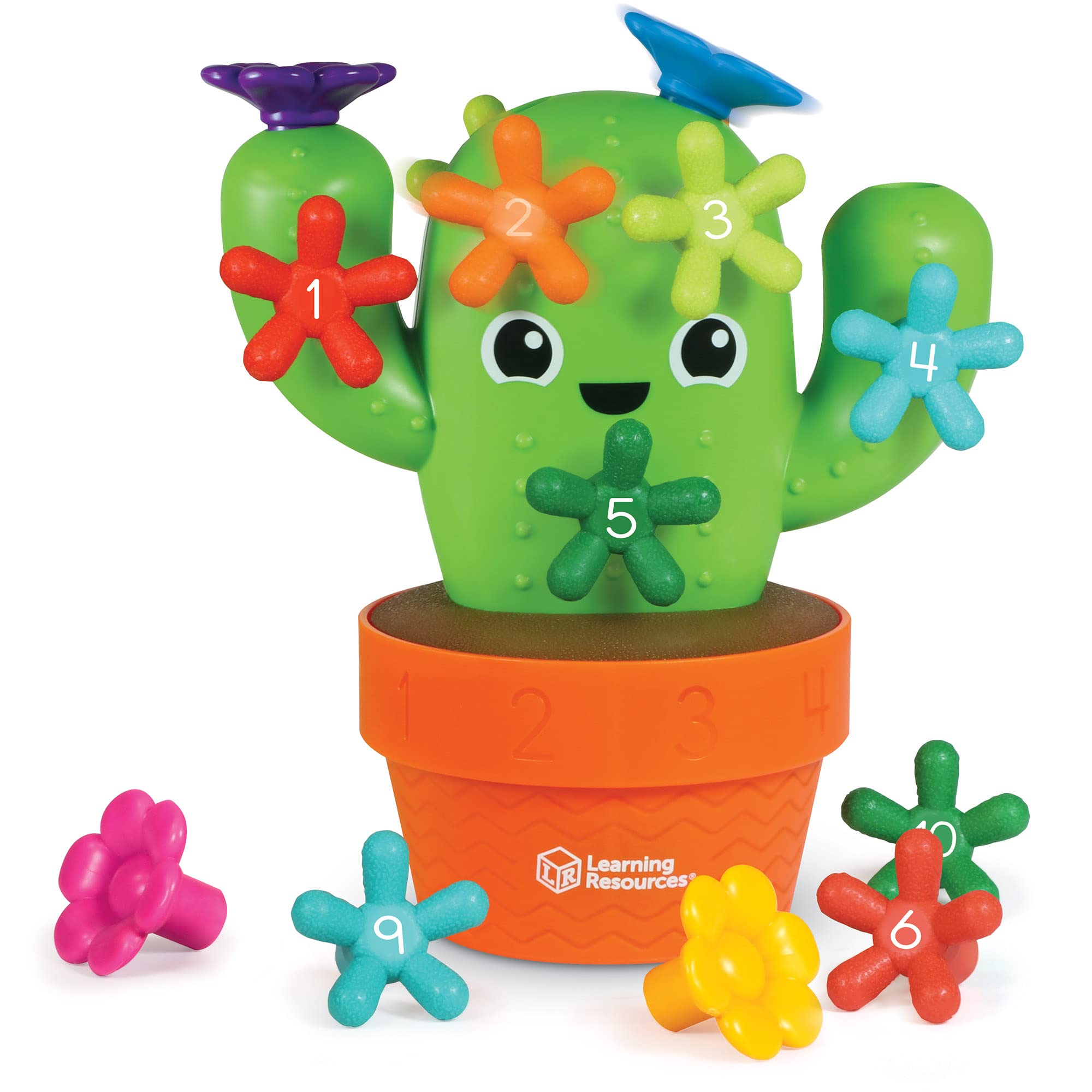
- Fourteen colorful pieces can be popped into the cactus and counted.
- The activity combines inserting pieces with counting.
- Designed for children as young as 18 months.
Best For: Toddlers who enjoy placing and removing pieces while practicing counting.
Learning Resources Rock ’n Gem Surprise
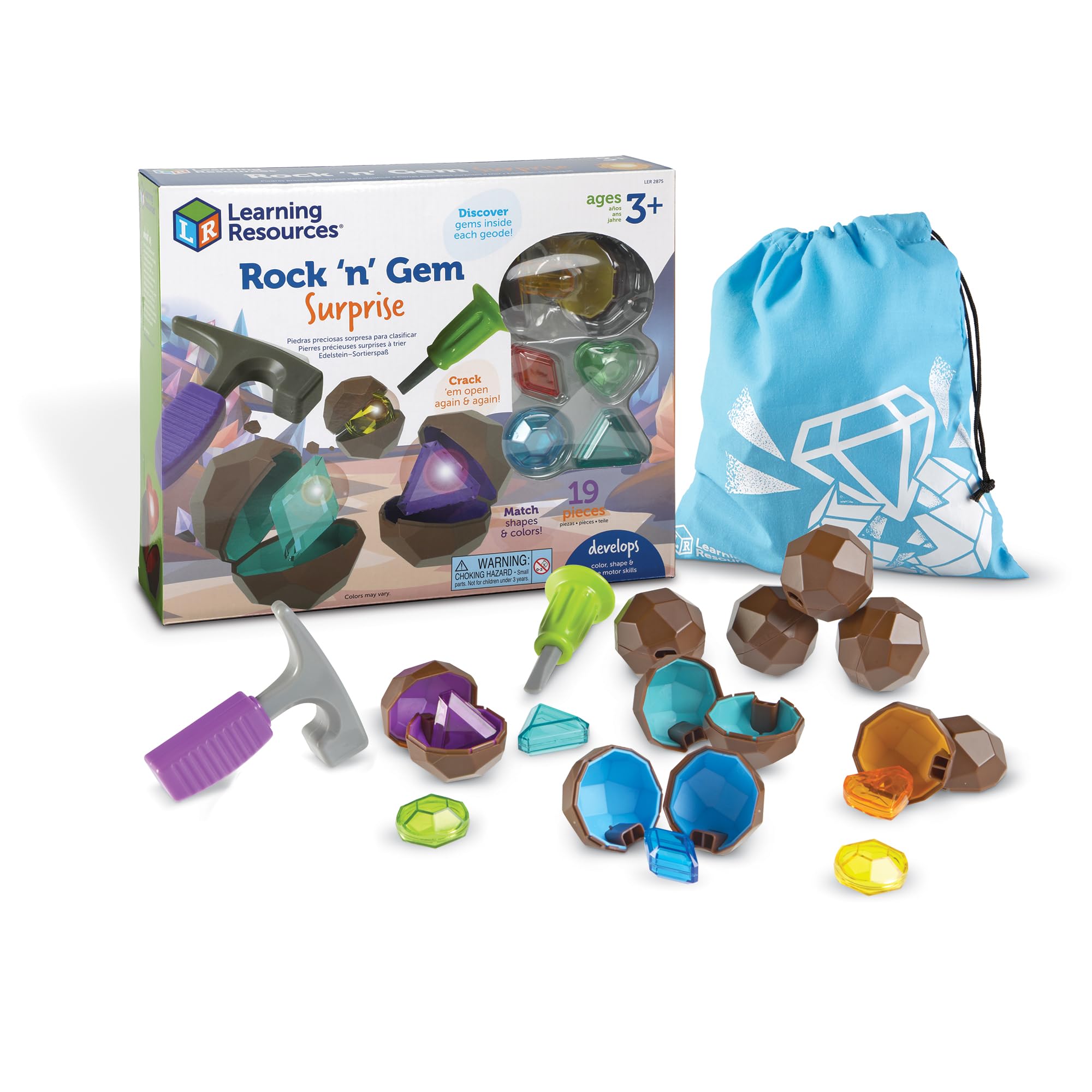
- A hammer and chisel open reusable plastic geodes.
- Gems come in eight colors and four shapes for sorting and counting.
- The set includes a drawstring storage bag.
Best For: Preschoolers who enjoy discovery play alongside sorting and matching.
Learning Resources Shape & Color Garden
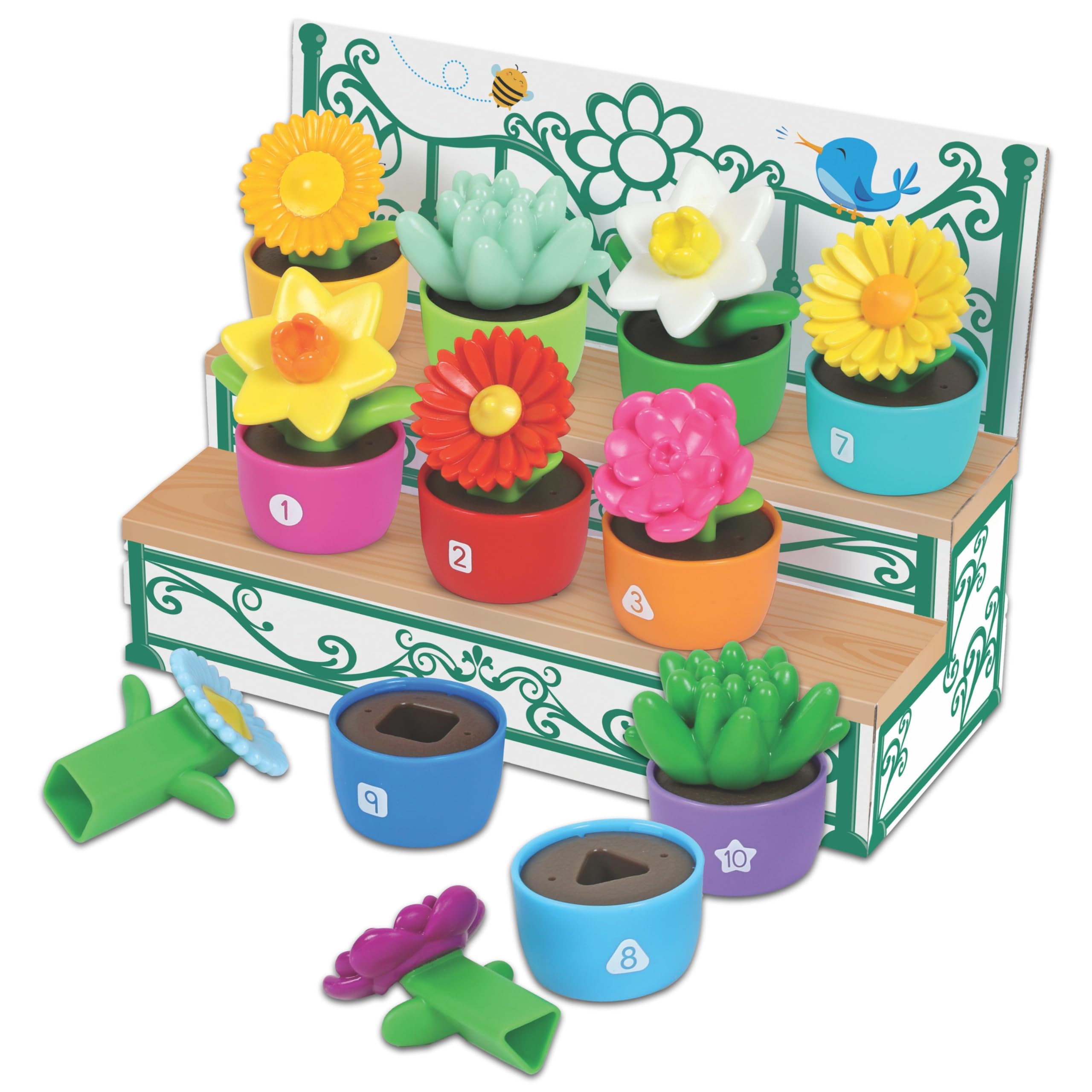
- Children can sort, stack, and plant bright flowers.
- The set is made with 70% postconsumer recycled plastic.
- An activity guide includes sustainability facts.
Best For: Toddlers and preschoolers who enjoy building flowers and sorting by shape or color.
Flower Pot Stacking for Toddlers
Learning Resources Poppy the Count & Stack Flower Pot
Poppy combines stacking with a simple pretend-play theme. Children stack the two-piece flowers, count them, or pick them from the pot and carry it by its kid-sized handle.
The set is designed for children as young as 18 months, so it suits families looking for an early stacking activity with a counting prompt built in. It offers a more focused experience than a broad sorting kit: the central activity is assembling and counting flowers.
Choose it when a compact, characterful toy is a better fit than a set with cards, tools, or many different sorting challenges.
Best For: Toddlers ready to stack, count, and carry a playful flower pot.
| Pros | Cons |
|---|---|
|
|
Choose Poppy when a young toddler is ready for a simple stack-and-count routine with a pretend-play element. The handle makes it easy to carry the pot from one play area to another, while the flowers offer a clear activity without a separate set of cards or tools.
Check the included-piece count before buying if that matters for your play setup; the available details identify six flowers but do not give a total set count.
Musical Ring Stacking
BEST LEARNING Stack & Learn - Developmental Educational Activity Stacking Toy for 6 or 9 Month Old Baby and Up | First 1 Year Boy Girl Birthday Gift
This ring stacker adds music and sound prompts to a familiar stacking activity. Its five colorful rings represent different colors, musical instruments, or animal sounds, and three play modes teach colors, animal sounds, and instruments.
The rings can be arranged in different combinations to produce different songs and sounds, adding an experimental element as children stack. The toy is intended for ages 6 months to 3 years and includes three AAA batteries.
Pick it for a baby or toddler who responds to interactive sound; families seeking quiet, open-ended stacking may prefer a simpler set of rings.
Best For: Babies and toddlers who enjoy sound-based play alongside stacking.
| Pros | Cons |
|---|---|
|
|
Choose this set when sound is part of the appeal and you want stacking to introduce colors, animal sounds, and instruments. The included batteries mean it is ready for interactive play without a separate battery purchase.
Before buying, consider whether musical feedback fits your home or childcare setting, and check for volume controls if that detail matters; it is not specified here.
Simple Six-Ring Stack
Mr. Pen- Stacking Rings Toy, 6 pcs, Stacking Toys, Stacking Rings | Baby Stacking Toys, Stacking Ring Baby Toy, Christmas Gift
Mr. Pen’s set keeps the activity simple: six brightly colored rings of varying sizes can be arranged to explore size and sequence. The rings are designed for little hands, and the stackable form makes the toy easy to store or transport for play at home, school, or on a trip.
It is a practical choice for caregivers who want a basic stacking toy rather than sound modes, themed pieces, or a larger assortment of activities. The available product details do not identify a recommended age, so check age guidance and included components before choosing it for a particular child.
Best For: Families wanting a straightforward, portable ring stacker for early sequencing play.
| Pros | Cons |
|---|---|
|
|
Pick this set if your priority is a portable, uncomplicated stacker that introduces size and order through play. Its six rings make it a more defined activity than loose counters, while avoiding the extra sounds of an interactive toy.
Confirm age guidance and whether the pictured or expected stacking base is part of the set before purchasing, since those details are not provided.
Farm Animal Balance Stacking
IPOURUP Montessori Toys for Kids 3-7 Wooden Farm Animal Blocks Stacking Games Educational Toy for 3 4 5 6 Year Old Girls Boys Christmas Birthday Gifts for Grandkids Toddler Balance Game Girls Age 3-5
This wooden set turns stacking into a balance challenge with eleven colorful farm animals and a base. Children can build different arrangements while exploring animal names and colors, giving it a more imaginative angle than a conventional ring stacker.
The blocks are described as chunky for easier grasping and have rounded corners. The set is aimed at children aged 3–6 and comes in a gift box, with a travel-friendly use also mentioned.
It suits preschoolers who enjoy experimenting with arrangements; check the exact contents and supervision needs for your child before play, as the available details do not give the individual block dimensions.
Best For: Preschoolers interested in animals and balancing blocks on a base.
| Pros | Cons |
|---|---|
|
|
Choose the farm set when a child is drawn to animals and may enjoy testing which arrangements stay balanced. The base provides a clear play focus, while the chunky pieces are intended for easier grasping.
It is aimed at ages 3–6, so consider the child’s comfort with balancing play and check the piece dimensions if you need to assess how well the blocks fit their hands.
Dinosaur Stacking Competition
IPOURUP Dinosaur Toys for Kids 3-5: Wooden Stacking Montessori Toys for 3 4 5 6 7 8 Year Old Balance Competition Game for Family Ideal Christmas Birthday Gifts for Kids Ages 3-8 (Double Version)
This double-version dinosaur set is built around balancing and competition. It includes two bases and twenty dinosaur blocks, and its instruction manual offers nine stacking methods for beginners to try.
The product is intended for ages 3 and up and supports play for one to four people, so it can work as a solo challenge or a family activity. Compared with the farm-animal set, it has more pieces and explicitly includes multiple methods and a competition format.
Choose it for dinosaur fans who enjoy structured challenges, and check that the double set’s larger piece assortment suits your storage space.
Best For: Families who want a dinosaur-themed stacking challenge for shared play.
| Pros | Cons |
|---|---|
|
|
Pick the dinosaur version when shared play and structured stacking methods matter. The two bases and twenty blocks support a competition format, and the manual gives beginners nine ways to start.
It is a larger assortment than a single animal balance toy, so think about storage and play space. Check dimensions before buying if you need to know how substantial the blocks are for your child.
Ice Cream Stack-and-Sort Play
Learning Resources Smart Scoops Math Activity Set, Stacking and Sorting Toys, Develops Early Math Skills, 55 Pieces, Ages 3+
Smart Scoops uses an ice cream theme to make stacking and sorting part of pretend play. Children can stack colorful scoops, sort them with brightly colored bowls, and follow double-sided cards with lessons and examples.
The set is described as a 55-piece activity set for ages 3 and up, with a storage container for cleanup. It offers more guided math activity than a basic ring stacker, while keeping the play theme familiar and imaginative.
Choose it when you want sorting and sequencing in a pretend-play format, and check the card activities if you want a particular level of math challenge.
Best For: Preschoolers who enjoy pretend ice cream play with early math prompts.
| Pros | Cons |
|---|---|
|
|
Choose Smart Scoops for a preschooler who is motivated by pretend food and can use prompts for counting or sequencing. The double-sided cards add guidance, and the container supports cleanup.
It is more activity-led than an open-ended ring stacker, so check the included pieces and lesson examples to see whether the set matches the kinds of play you want.
Layer Cake Number Stacking
Learning Resources Stack and Count Layer Cake - 10 Pieces, Ages 18+ months Toddler Learning Toys, Early Stacking and Counting Skills for toddlers
This play cake combines stacking with early number recognition. Its ten alternating chocolate and vanilla layers are designed to stack, and decorations on each layer correspond to the numeral on its side.
That gives children a visual link between assembling the cake and noticing numbers, without requiring a separate activity card. It is intended for ages 18 months and up, making it a younger-child option among the more preschool-focused sorting sets.
Pick it for a child who enjoys pretend food and simple counting practice; check how the layers fit together and whether the set includes other accessories if those matter to you.
Best For: Toddlers who like pretend food and are beginning to notice numerals.
| Pros | Cons |
|---|---|
|
|
Choose the layer cake for a toddler who is interested in pretend food and ready to connect stacking with numerals. The alternating layers and matching decorations give the activity a clear learning focus.
It is more number-oriented than a plain stacker and less varied than a sorting kit with multiple tools. Check the full piece contents if you expect extra pretend-play accessories.
Pop-and-Count Cactus
Learning Resources Carlos the Pop & Count Cactus - 16 Pieces, Age 18+ Months, Toddler Montessori Toys, Stacking Shape, Sorting And Matching Skill Activities, Educational Games
Carlos offers a tactile alternative to conventional stacking rings. Children pop colorful spikes and flowers into the cactus, remove them, and count the pieces.
Designed for children as young as 18 months, it emphasizes fine motor play, colors, and counting. Its cactus theme makes the activity feel like planting or decorating, while the simple insert-and-remove motion gives little hands a repeated task.
Choose it when a toddler is drawn to hands-on placement play; compare its 14 colorful pop-and-count pieces with ring stackers if you want a taller, more traditional tower-building activity.
Best For: Toddlers who enjoy placing and removing pieces while practicing counting.
| Pros | Cons |
|---|---|
|
|
Choose Carlos when a toddler enjoys putting objects into a toy and pulling them back out. The 14 pieces create repeated opportunities to count and notice colors, while the design targets fine motor practice from 18 months.
It is an insert-and-remove activity rather than a classic stacker, so consider whether that motion fits the play your child prefers. Check dimensions if size is important.
Geode Reveal Sorting Set
Learning Resources Rock 'n Gem Surprise - 19 Pieces, Ages 3+ Toddler Learning Toys, Sorting and Matching Toys, Early STEM for Kids
Rock ’n Gem Surprise makes sorting feel like a small discovery activity. Children use the hammer and chisel to open plastic geodes and reveal gems, then sort, match, or count the gems by their eight colors and four shapes.
The set is intended for ages 3 and up and includes a drawstring bag for storage. The opening action adds a tool-based step that a basic counter set does not have, while the plastic geodes avoid loose play material such as real rocks.
Choose it for preschoolers who enjoy reveal play and classification, and check whether tool use is appropriate for your child.
Best For: Preschoolers who enjoy discovery play alongside sorting and matching.
| Pros | Cons |
|---|---|
|
|
Pick this set when a preschooler is motivated by opening surprises and then sorting what is inside. The eight colors and four shapes offer several ways to classify the gems, while the included bag supports putting everything away.
The hammer and chisel are part of the activity, so consider whether your child is ready to use those tools during play. Check piece dimensions if that affects your choice.
Recycled-Plastic Shape and Color Garden
Learning Resources Shape & Color Garden - Montessori Toddler Toys, Sorting Sensory Toys, Kids Gardening Set, Flower Building Set, Preschool Learning Activities, Educational Montessori Toddler Gifts | Montessori Toddler Toys, Sorting Sensory Toys, Kids Gardening Set, Flower Building Set, Preschool Learning Activities
Shape & Color Garden brings sorting and stacking into a flower-building activity. Children can plant bright flowers, sort by shape, and practice colors, counting, and matching through hands-on play.
The set is made with 70% postconsumer recycled plastic and includes an activity guide with sustainability facts. Its garden theme offers open-ended building alongside learning prompts, with classroom or daycare activities also supported.
The available details do not specify the number of flower pieces, so check the set contents if piece count matters.
Best For: Toddlers and preschoolers who enjoy building flowers and sorting by shape or color.
| Pros | Cons |
|---|---|
|
|
Choose Shape & Color Garden when a child is attracted to flowers and can enjoy both building and sorting. The recycled-plastic content is a specific material feature, and the activity guide adds conversation prompts beyond the toy itself.
Because the available details do not give a piece count or a precise age range, check both if you need to compare set size or suitability with other sorting and stacking toys.
How to Choose Sorting And Stacking Toys
How We Picked Sorting and Stacking Toys
We prioritized toys that make sorting, stacking, or balancing a central part of play and give children a clear way to explore order, color, shape, counting, or size. The picks range from simple ring stacks to tactile pop-in pieces, themed building sets, and preschool activities with cards or tools.
We also considered how age guidance and play format affect fit. A toy intended for babies or younger toddlers may offer a simpler repeated action, while preschool sets can add balance challenges, multiple sorting rules, or early math prompts.
We left out loose counters and activity kits when stacking was not a substantial part of the play.
Comparing Sorting and Stacking Toys
The simplest choices are the ring stackers: Mr. Pen keeps the activity basic, while Stack & Learn adds songs and sound modes. Poppy and the layer cake bring stacking into pretend play, and Carlos adds an insert-and-remove action for toddlers.
For preschoolers, the farm and dinosaur balance sets make stability part of the challenge. Smart Scoops and Rock ’n Gem Surprise add themed sorting and guided activity, while Shape & Color Garden combines flower building with color and shape practice.
The product table highlights the differences in age guidance, included pieces, and play style.
| Product | Standout features | Best for |
|---|---|---|
| Learning Resources Poppy the Count & Stack Flower PotCheck Price |
| Toddlers ready to stack, count, and carry a playful flower pot. |
| BEST LEARNING Stack & Learn Musical Stacking RingsCheck Price |
| Babies and toddlers who enjoy sound-based play alongside stacking. |
| Mr. Pen Stacking Rings ToyCheck Price |
| Families wanting a straightforward, portable ring stacker for early sequencing play. |
| IPOURUP Wooden Farm Animal Stacking BlocksCheck Price |
| Preschoolers interested in animals and balancing blocks on a base. |
| IPOURUP Wooden Dinosaur Balance GameCheck Price |
| Families who want a dinosaur-themed stacking challenge for shared play. |
| Learning Resources Smart Scoops Math Activity SetCheck Price |
| Preschoolers who enjoy pretend ice cream play with early math prompts. |
| Learning Resources Stack and Count Layer CakeCheck Price |
| Toddlers who like pretend food and are beginning to notice numerals. |
| Learning Resources Carlos the Pop & Count CactusCheck Price |
| Toddlers who enjoy placing and removing pieces while practicing counting. |
| Learning Resources Rock ’n Gem SurpriseCheck Price |
| Preschoolers who enjoy discovery play alongside sorting and matching. |
| Learning Resources Shape & Color GardenCheck Price |
| Toddlers and preschoolers who enjoy building flowers and sorting by shape or color. |
Choosing a Toy for Your Child’s Age and Play Style
Look at the age guidance alongside the action the child will repeat. Poppy, Carlos, and the layer cake are designed for children as young as 18 months; Stack & Learn is intended for 6 months to 3 years.
The farm balance set is aimed at ages 3–6, while the dinosaur game is for ages 3 and up.
Consider whether the child prefers fitting pieces into a toy, building upward, balancing blocks, or sorting by rules. For a younger toddler, a repeated placement action may be easier to start with.
Preschoolers who enjoy a challenge may be more engaged by stacking methods, activity cards, or sorting with tools.
What to Check Before Buying a Sorting Toy
Piece count and storage matter when a set includes many small components. Smart Scoops includes a storage container, Rock ’n Gem Surprise has a drawstring bag, and the dinosaur game comes with a storage bag.
Check individual piece dimensions and age guidance when those details affect how the toy will be used.
Interactive features can shape the play environment. Stack & Learn uses music and sound, whereas the ring stacker and wooden balance sets focus on manual play.
For sets with tools, such as the geode activity, consider whether a child is ready to use the included hammer and chisel with supervision.
Who Should Buy Which Sorting and Stacking Toy?
Choose a basic ring stacker for simple sequencing and a compact play routine. Pick Poppy, the layer cake, or Carlos when a toddler is drawn to flowers, pretend food, or hands-on placement.
For a child who likes to experiment with balance, consider the farm or dinosaur set.
For preschool sorting with a theme, Smart Scoops, Rock ’n Gem Surprise, and Shape & Color Garden offer different routes into matching, counting, and building. Match the toy to the child’s preferred activity and check age guidance, piece contents, and storage before choosing.